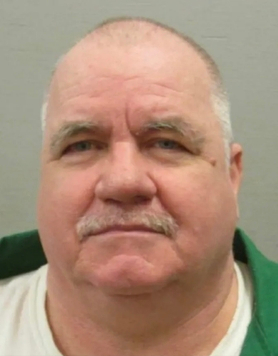
SUBJECT ON RECORD · EXECUTED BY RIFLE
Brad Keith Sigmon
The execution that ended the fifteen-year American pause. Sigmon chose the rifle because he believed South Carolina's untested lethal-injection drugs would kill him worse — and because he did not want to burn.
- Born
- January 15, 1958
- Died
- March 7, 2025 · Broad River Correctional Institution, Columbia
- Age at death
- 67
- Convicted of
- Two counts of capital murder
- Method
- Firing squad
- Facility
- Broad River Correctional Institution — death chamber, Columbia
VICTIMS ON RECORD
- V·01David Larke and Gladys Larke · his ex-girlfriend's parents · Greenville County · April 2001
§ 01
EARLY LIFE AND FAMILY HISTORY
Brad Keith Sigmon was born on November 12, 1957, in South Carolina to Ronnie and Virginia Sigmon. His mother was seventeen years old at the time of his birth, and the couple went on to have four more children in rapid succession, with each sibling born roughly a year apart. Because Ronnie Sigmon served in the United States military, the family was required to relocate frequently during Brad's formative years. They resided in various South Carolina municipalities, including Taylors and Greer, and spent a period in the Philippines following the birth of the youngest child. The domestic environment was characterized by instability and violence, as Ronnie Sigmon struggled with alcoholism and frequently subjected Virginia to physical abuse.
Although his siblings were reportedly spared from Ronnie's physical violence, Brad Sigmon became a primary target for his father's aggression, often intervening in attempts to shield his mother from beatings. The parents eventually divorced, and Brad spent much of his childhood moving between the residences of his biological parents and their subsequent spouses. At the age of sixteen, while enrolled in high school in Simpsonville, he began working to provide financial support for the family. Following his parents' legal separation, he assumed a significant portion of the responsibility for raising and caring for his younger siblings.
Sigmon's history of criminal conduct began at the age of eighteen with an arrest for armed robbery in Greer on May 29, 1976. In 1977, he withdrew from high school only nine weeks prior to his scheduled graduation to enter into a marriage. The couple moved to Manning, South Carolina, and produced one son. Despite his criminal trajectory, family members, including his son, siblings, and step-parents, characterized Sigmon as a supportive and caring relative during this period. However, his adult life was increasingly marred by substance abuse and psychiatric instability. Throughout the 1980s, his legal record was primarily comprised of driving under the influence charges. A violent domestic incident occurred on November 17, 1990, when Sigmon was shot multiple times in the abdomen while attempting to break into his estranged wife's residence. Their twelve-year-old son was also wounded by gunfire during the confrontation. Sigmon survived after undergoing surgery and eventually returned to Greenville County in the late 1990s.
§ 02
THE TAYLORS DOUBLE HOMICIDE
The events leading to the double homicide began with the dissolution of a three-year romantic relationship between Brad Sigmon and Rebecca Barbare. The pair had shared a trailer, but in early 2001, Barbare terminated the relationship and moved into the residence of her parents, William David Larke and Gladys Gwendolyn Larke, located at 948 East Darby Road in Taylors, South Carolina. Sigmon responded to the separation with increasing obsession, engaging in stalking behaviors and repeatedly demanding a reconciliation. He monitored the Larke residence to determine if Barbare was pursuing other romantic interests.
On the night of April 26, 2001, Sigmon consumed alcohol and cocaine with an associate, Eugene Strube. During this encounter, Sigmon detailed a plan to infiltrate the Larke home after Barbare left to transport her children to school. He intended to restrain David and Gladys Larke to ensure he could confront Barbare without interference. Although Strube initially agreed to assist in the crime, he ultimately withdrew from the plan. Sigmon proceeded alone the following morning, arriving at the Darby Road property on April 27.
Sigmon entered the residence and encountered 62-year-old David Larke in the kitchen and 59-year-old Gladys Larke in the living room. Utilizing a baseball bat as a weapon, he launched a sustained assault on both victims. Sigmon moved between the two rooms, striking each victim nine times in the head. The force of the blows was sufficient to crush their skulls, resulting in immediate and fatal brain trauma. Following the murders, Sigmon remained in the house, arming himself with a firearm belonging to David Larke. He waited for Rebecca Barbare to return to the scene, positioning himself to intercept her arrival.
§ 03
ABDUCTION, ESCAPE, AND CAPTURE
When Rebecca Barbare arrived at her parents' home following the murders, she was immediately confronted by Sigmon, who brandished her father's handgun. He forced her into a 2001 Honda Passport at gunpoint, initiating a kidnapping. Sigmon intended to transport Barbare to a secondary location where he could switch vehicles and then drive her into North Carolina. As the vehicle was in motion, Barbare managed to open the passenger door and leap from the car. Despite the risk of injury from the fall, she attempted to flee on foot.
Sigmon stopped the vehicle and gave chase, firing several rounds from the handgun in her direction. Barbare was not struck by the gunfire and managed to successfully evade him by reaching safety and seeking assistance. She was subsequently transported to Greenville Memorial Hospital for medical evaluation and treatment for injuries sustained during her escape from the vehicle. Sigmon abandoned his pursuit and fled the area, prompting a massive law enforcement response as the bodies of David and Gladys Larke were discovered inside their residence.
A multi-state manhunt ensued, with authorities issuing warrants for two counts of murder, kidnapping, and assault with intent to kill. Police across the region were alerted to Sigmon's description and potential flight paths. After eleven days of evasion, Sigmon was located and apprehended in Gatlinburg, Tennessee. He offered no significant resistance during the arrest and was subsequently extradited back to Greenville County, South Carolina, to face formal charges. Prosecutors quickly signaled their intention to seek the maximum penalty allowed by law for the brutal nature of the Larke homicides.
§ 04
JUDICIAL PROCEEDINGS AND INITIAL APPEALS
The legal proceedings against Brad Sigmon commenced with his indictment on multiple felony charges, including two counts of murder, first-degree burglary, and kidnapping. His trial began in July 2002. During the proceedings, Sigmon effectively admitted his guilt to the jury, focusing the litigation on the determination of his sentence rather than his culpability. The prosecution emphasized the brutality of the killings, characterizing the deaths of David and Gladys Larke as horrific and arguing that the aggravating circumstances warranted the death penalty. They urged the jury to provide the same level of mercy to Sigmon that he had shown to his victims in their final moments.
The defense team sought to mitigate the sentence by highlighting Sigmon's history of substance abuse and the psychological distress caused by his relationship failure. They presented evidence of his cooperative behavior while incarcerated and argued for a sentence of life imprisonment without the possibility of parole. Despite these arguments, the jury deliberated and returned a unanimous verdict on July 20, 2002, sentencing Sigmon to death for each of the two murders. Additionally, the court imposed a consecutive thirty-year prison sentence for the first-degree burglary conviction.
Following the conviction, Sigmon initiated a lengthy series of appeals through the state and federal court systems. The South Carolina Supreme Court affirmed his conviction and death sentences during a direct appeal in 2005 and rejected a second state-level appeal in 2013. Federal litigation followed, with the U.S. District Court for the District of South Carolina dismissing his initial federal petition in 2018. The 4th Circuit Court of Appeals upheld this dismissal in 2020. The final avenue for relief was closed on January 11, 2021, when the United States Supreme Court declined to review his case, clearing the way for the state to schedule an execution date.
§ 05
LEGAL CHALLENGES AND EXECUTION MORATORIUM
After the exhaustion of his primary appeals, Sigmon's execution was first scheduled for February 12, 2021. However, the South Carolina Supreme Court issued an indefinite stay just one week before the date because the state lacked the necessary pharmaceuticals for lethal injection. At the time, South Carolina was experiencing an unofficial moratorium on capital punishment that had lasted since 2011, primarily due to the refusal of manufacturers to supply execution drugs and the expiration of existing stockpiles. Sigmon's legal team successfully argued that he could not be executed using a method the state was unable to perform, especially since the electric chair was the only other legal option and Sigmon had a statutory right to choose between methods.
In response to the drug shortage, South Carolina legislators amended state law to establish the electric chair as the default execution method while introducing the firing squad as an alternative option. This legislative shift was intended to bypass the pharmaceutical supply issues. Following the passage of this law, a second death warrant was issued for Sigmon with an execution date of June 18, 2021. This warrant was also stayed by the state supreme court, which ruled that the state could not force an inmate to choose between electrocution and a firing squad that had not yet been fully implemented or staffed.
A third death warrant was issued for May 13, 2022, but this too was stayed as Sigmon joined other death row inmates in a lawsuit challenging the constitutionality of the state's revised execution protocols. The inmates argued that both the electric chair and the firing squad constituted cruel and unusual punishment under the Eighth Amendment, asserting that these methods could lead to unnecessary and prolonged suffering. The state countered by asserting that the law did not guarantee a painless death and that both methods met historical and legal standards for capital punishment.
§ 06
CONSTITUTIONAL LITIGATION AND SCHEDULING
The constitutional challenge to South Carolina's execution methods reached the state supreme court in 2024. In a ruling issued on July 31, the court upheld the legality of the electric chair and the firing squad by a majority vote. The justices determined that the state had the authority to utilize these methods when lethal injection was unavailable, effectively ending the decade-long pause in executions. This decision placed Sigmon among five inmates who had exhausted their appeals and were prioritized for execution scheduling. The court subsequently established a protocol where executions would be carried out at five-week intervals to allow the Department of Corrections adequate preparation time.
As the state resumed executions in late 2024, starting with Freddie Owens and Richard Moore, Sigmon and several other inmates petitioned the court for a temporary reprieve during the winter holiday season. They argued that a rapid succession of executions would place an undue psychological burden on prison staff, legal teams, and the families involved. The state opposed this delay, noting that executions had historically been conducted in December and January without issue. However, the South Carolina Supreme Court granted the request in November 2024, ordering that no death warrants be signed until after January 3, 2025.
During this period, the state also announced it had successfully acquired a supply of pentobarbital, allowing for the resumption of lethal injections. This development added a third option for condemned inmates, though the state maintained strict secrecy regarding the source and testing of the drugs. This lack of transparency became a central point of contention for Sigmon's final legal maneuvers, as his attorneys argued he could not make an informed choice between methods without knowing the quality and efficacy of the lethal injection drugs being utilized.
§ 07
SELECTION OF THE FIRING SQUAD
On February 7, 2025, the South Carolina Supreme Court issued Sigmon's final death warrant, scheduling his execution for March 7. He was given a statutory deadline of February 21 to select his preferred method of death from three options: lethal injection, the electric chair, or the firing squad. Sigmon's decision was heavily influenced by the recent execution of Marion Bowman Jr., which had taken place in January. Witnesses to that execution reported that Bowman did not appear to die quickly after the administration of pentobarbital, leading to concerns that the drug caused a sensation of drowning due to pulmonary edema.
Sigmon's legal counsel stated that their client faced an 'impossible choice.' He expressed a deep fear of the electric chair, believing it would result in him being 'cooked alive' through sustained electrical current. While he acknowledged the violence inherent in the firing squad, he concluded it was preferable to a potentially botched or prolonged lethal injection. On the deadline of February 21, Sigmon officially selected the firing squad, becoming the first person in South Carolina history to do so and only the fourth person in the United States to be executed by this method since the 1970s. The decision was framed by his attorneys as a desperate attempt to avoid a more torturous death.
In the final weeks before the execution, Sigmon filed last-minute appeals based on neurological evidence of brain damage and childhood trauma, which he argued should exempt him from capital punishment. He also sought a stay until the full autopsy results from Marion Bowman's execution were released, hoping to prove that the state's lethal injection protocol was inhumane. The South Carolina Supreme Court denied these requests on March 4, and a final appeal to the United States Supreme Court was rejected on the afternoon of his scheduled execution. Governor Henry McMaster also denied a petition for clemency, stating that he found no reason to alter the jury's original sentence.
§ 08
THE MARCH 7 EXECUTION AND FINAL PLEA
The execution of Brad Sigmon was carried out on March 7, 2025, at the Broad River Correctional Institution in Columbia. The state had spent approximately $54,000 to renovate the death chamber for firing squad procedures, which included the installation of bullet-resistant glass and a specialized chair. Sigmon was strapped into the chair and fitted with a hood. A small target was pinned to his chest directly over his heart. The execution team consisted of three volunteer prison employees who were positioned behind a wall with an opening fifteen feet away from the inmate. Each member was armed with a rifle loaded with .308 Winchester ammunition, designed to fragment upon impact to maximize tissue destruction and ensure a rapid death.
The firing occurred at 6:05 p.m. without a formal countdown. Witnesses, including journalists and family members of the victims, observed a sudden splash of blood on Sigmon's chest as the rounds struck him. His body experienced muscle spasms and his arms flexed against the restraints for several seconds before he became motionless. A basin placed beneath the chair collected the resulting blood. A physician pronounced Sigmon dead at 6:08 p.m. Observers noted that while the event was violent and audible, Sigmon appeared to maintain a calm expression behind the hood prior to the volley of gunfire. He was sixty-seven years old at the time of his death, making him the oldest person executed by the state in the modern era.
Before the hood was placed over his head, Sigmon issued a final statement that focused on his religious convictions and the ethics of capital punishment. He appealed to fellow Christians to work toward the abolition of the death penalty, arguing that the 'eye for an eye' justification often cited from the Old Testament had been superseded by the New Testament's emphasis on grace and mercy. He asserted that the authority to take human life belonged solely to God and expressed a hope that his death would serve as a catalyst for ending state-sanctioned executions. His last meal, which he had requested earlier that day, consisted of fried chicken, biscuits, mashed potatoes with gravy, and cheesecake.
LAST WORDS
"A statement asking fellow Christians to work toward abolishing the death penalty."