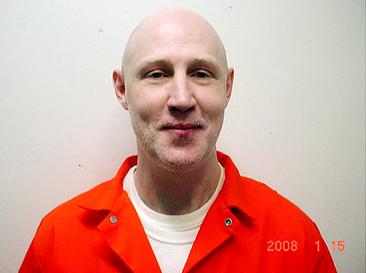
SUBJECT ON RECORD · EXECUTED BY RIFLE
Ronnie Lee Gardner
Gardner picked the rifle in 1985 under Utah's old grandfather clause and held the state to it a quarter-century later, forcing the country to remember what a firing squad was before South Carolina rebuilt one.
- Born
- January 16, 1961 · Utah
- Died
- June 18, 2010 · Utah State Prison, Draper
- Age at death
- 49
- Convicted of
- Capital murder of Michael Burdell
- Method
- Firing squad
- Facility
- Utah State Prison execution chamber
VICTIMS ON RECORD
- V·01Melvyn Otterstrom · bartender · 1984 robbery-murder
- V·02Michael Burdell · attorney · shot during 1985 courthouse escape
§ 01
EARLY LIFE AND FAMILY BACKGROUND
Ronnie Lee Gardner was born in Salt Lake City on January 16, 1961, as the youngest of seven children in a household defined by extreme instability. His father, Dan Gardner, was a heavy drinker who abandoned the family to start another one when Ronnie was only a toddler. The parents' marriage officially ended when the boy was 18 months old, leaving his mother, Ruth, to struggle alone with the large family. The depth of the neglect Ronnie suffered became a matter of public record shortly thereafter when child welfare authorities discovered the two-year-old wandering the streets alone, malnourished and wearing nothing but a diaper. Although he was initially taken into state custody under a 'failure to care' petition, he was eventually returned to his mother's care, where the cycle of neglect continued.
The family environment remained toxic throughout his formative years. Gardner’s relationship with his father was defined by overt hostility and rejection; Dan frequently told Ronnie that he did not believe he was the boy's biological parent. Ronnie later reported that he was primarily raised by an older sister and that he suffered sexual abuse at the hands of several siblings. To escape the conditions at home, he and his sister Bonnie would often run away, finding temporary refuge in local transient camps. By the age of 10, Gardner had already begun using drugs and alcohol, and his first arrest occurred shortly after when he and his brother Randy were caught stealing cowboy boots. The emotional trauma of his youth was punctuated by a moment at the juvenile detention center when his father arrived to retrieve Randy but deliberately chose to leave Ronnie behind, an event he recalled with bitterness for the rest of his life.
§ 02
YOUTH IN INSTITUTIONS AND FOSTER CARE
Following his mother's marriage to Bill Lucas, Gardner found a father figure who further steered him toward a life of criminality. Lucas, who had his own history of incarceration, utilized his stepsons as lookouts during residential burglaries. This early introduction to organized theft led Gardner into a cycle of institutionalization that would consume the remainder of his life. By his early teenage years, he had been placed in a series of juvenile facilities, including an involuntary commitment to the Utah State Hospital in Provo. Small in stature and facing a hostile environment, he adopted a violent demeanor to defend himself and gain respect among his peers, eventually describing his younger self as a 'nasty' and aggressive child who fought constantly.
His experiences within the foster care system were often predatory and failed to provide the necessary intervention. After being released from the Utah State Industrial School in 1975, he was placed in the care of Jack Statt, a man who had previously paid Gardner's brother for sexual favors. Despite social workers observing that the men in the household were dressed in women's clothing, Statt was permitted to act as a foster parent for Gardner and his brother. During this period, Gardner was subjected to further sexual abuse and admitted to working as a prostitute under Statt's direction. Ironically, he would later describe this time as one of the most stable periods of his life, which reflected the profound level of dysfunction in his earlier home. Despite occasional returns to state schools, he attempted to form personal connections and fathered two children with Debra Bischoff. However, his criminal activities persisted, and by 1980, he was sentenced to adult prison for robbery. Even behind bars, Gardner remained a volatile figure, participating in prison riots and executing a successful escape from a maximum-security unit in 1981.
§ 03
THE 1984 MURDER OF MELVYN OTTERSTROM
In August 1984, Gardner escaped from custody at the University of Utah Hospital by faking an illness. During this escape, he viciously attacked a transportation officer, causing severe facial injuries that required reconstructive surgery. He then forced a medical student to transport him from the premises at gunpoint. While a fugitive, Gardner committed the crime that would begin his journey toward death row. On the night of October 9, 1984, while under the influence of cocaine, he entered Cheers Tavern in Salt Lake City with the intent to commit a robbery. During the heist, he shot the bartender, Melvyn John Otterstrom, in the face at point-blank range, killing him instantly.
The murder was described by investigators as particularly callous, as the robbery netted less than $100. Otterstrom was a 37-year-old veteran and father whose death devastated his family. In a display of sociopathy, Gardner reportedly attended Otterstrom's funeral, posing as a childhood friend of the victim to avoid suspicion. He was eventually apprehended by police three weeks later at a relative's home following a tip from an informant. Gardner claimed the shooting occurred because the bartender had put up a fight, but forensic evidence did not support this version of events. While held in custody on a $1.5 million bond for the Otterstrom murder, Gardner began planning the escape attempt that would lead to his second fatal shooting. His accomplice and getaway driver from the tavern robbery, Darcy Perry McCoy, eventually turned state's witness against him, though she would later be implicated in providing him with a weapon for his next crime.
§ 04
THE 1985 COURTHOUSE ATTACK
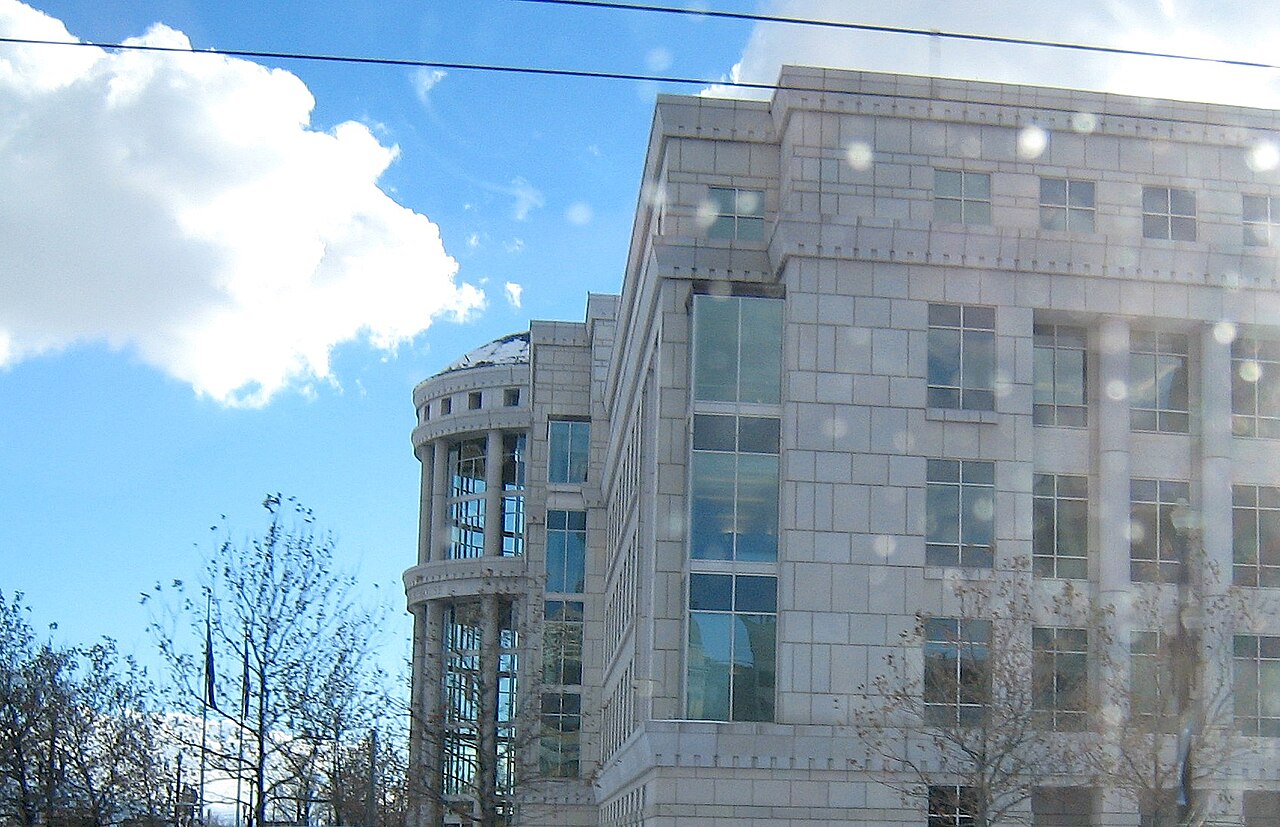
On April 2, 1985, Gardner was being escorted to a court hearing for the Otterstrom murder at the Metropolitan Hall of Justice in Salt Lake City. During this transit, he managed to acquire a revolver that had been smuggled into the building and hidden for him. As he was led from the underground parking garage into the courthouse, Gardner drew the weapon and attempted to flee. A security guard, Luther Hensley, immediately fired at Gardner, striking him in the right shoulder. Undeterred by the wound, Gardner opened fire on the guards and bystanders, shooting an unarmed bailiff, George 'Nick' Kirk, in the abdomen. The wounded Gardner then fled into the courthouse archives to hide and search for an exit.
In the archives, Gardner encountered two attorneys and pointed his gun at them. He ultimately shifted his aim toward Michael Burdell, a 36-year-old attorney who was at the courthouse performing pro bono legal work. Witnesses reported that Burdell cried out in fear just before Gardner shot him in the eye. Gardner then attempted to make his way outside the building but found himself surrounded by dozens of police officers. He surrendered only after being ordered to drop his weapon and lie on the ground. Burdell died during surgery a short time later, while Kirk survived his critical injuries but suffered permanent, debilitating health issues that family members claimed shortened his life. The security breach led to intense public criticism of the courthouse's layout and security protocols, which allowed high-risk prisoners to be moved through areas with unrestricted public access. This incident fundamentally changed how inmates were handled in Utah and heavily influenced the design and security measures of the new Scott M. Matheson Courthouse.
§ 05
TRIAL AND THE DEATH SENTENCE
In the wake of the courthouse shooting, Gardner faced two separate capital murder charges. In June 1985, he pleaded guilty to the murder of Melvyn Otterstrom and was sentenced to life in prison. However, the state proceeded with a capital trial for the killing of Michael Burdell. During these proceedings, Gardner's behavior remained disruptive; he threatened to cause a scene in court because he was required to wear a locking leg brace designed to prevent further escape attempts. His defense team attempted to argue that he was under extreme mental or emotional distress at the time of the shooting, which would have allowed for a lesser conviction of manslaughter rather than capital murder.
The jury rejected the defense's arguments, deliberating for less than three hours before finding Gardner guilty. When the time came for sentencing, the court followed Utah law, which at the time allowed condemned inmates to choose between lethal injection and a firing squad. Gardner opted for the firing squad, a choice that would later draw significant international attention. He famously stated that he would prefer to die of old age, but if execution was inevitable, he preferred the rifle. His incarceration continued to be marked by rebellion and violence. He was involved in a highly publicized incident where he broke a glass partition in the prison visiting area to engage in sexual acts while other inmates barricaded the doors. In 1994, he nearly killed another inmate with a shiv, leading to further legal battles over whether he could be sentenced to death for a non-fatal assault under a rarely used state law.
§ 06
TWENTY-FIVE YEARS OF APPEALS
Gardner’s case remained in the legal system for a quarter of a century as his defense team pursued every available avenue of appeal. These motions primarily focused on the adequacy of his legal representation and the mitigating circumstances of his childhood. His attorneys argued that the jury had not been fully informed of the extent of the abuse and neglect he suffered as a youth, nor the potential brain damage he may have sustained from a childhood bout of meningitis. They also pointed to his history of substance abuse, including 'huffing' inhalants as a child, as factors that diminished his culpability. They presented evidence that Gardner had been raised in an environment that made a life of violence almost inevitable.
Throughout this period, Gardner's stance on his own appeals fluctuated. He attempted to drop his legal challenges on at least three occasions, only to be talked back into the process by his lawyers. The long delay in carrying out the sentence became a point of significant political contention in Utah. In response to the 25-year duration of Gardner's case, state legislators introduced and eventually passed laws designed to streamline the appeals process and limit the number of petitions a death row inmate could file. By 2010, Gardner’s legal options had been exhausted. A final commutation hearing was held in June of that year, where Gardner claimed he had reformed and wished to start an organic farm for troubled youth. However, the Board of Pardons and Parole, moved by the testimony of the victims' families, denied his request for clemency, describing his efforts to change as 'too little, too late' given his long history of violent crime.
§ 07
THE FIRING SQUAD AND BLOOD ATONEMENT
Gardner's choice of the firing squad became a focal point for media coverage and religious debate as his execution date approached. Although Utah had removed the firing squad as an option for most inmates in 2004, a grandfather clause allowed those sentenced before the change to maintain their original choice. Gardner consistently reaffirmed his preference for the rifles over lethal injection, citing his Mormon heritage as the primary reason. This sparked a renewed public discussion regarding the 19th-century concept of 'blood atonement'—the idea that certain sins are so grievous that the perpetrator's own blood must be shed to attain divine forgiveness. This theological debate drew journalists from across the globe to Salt Lake City.
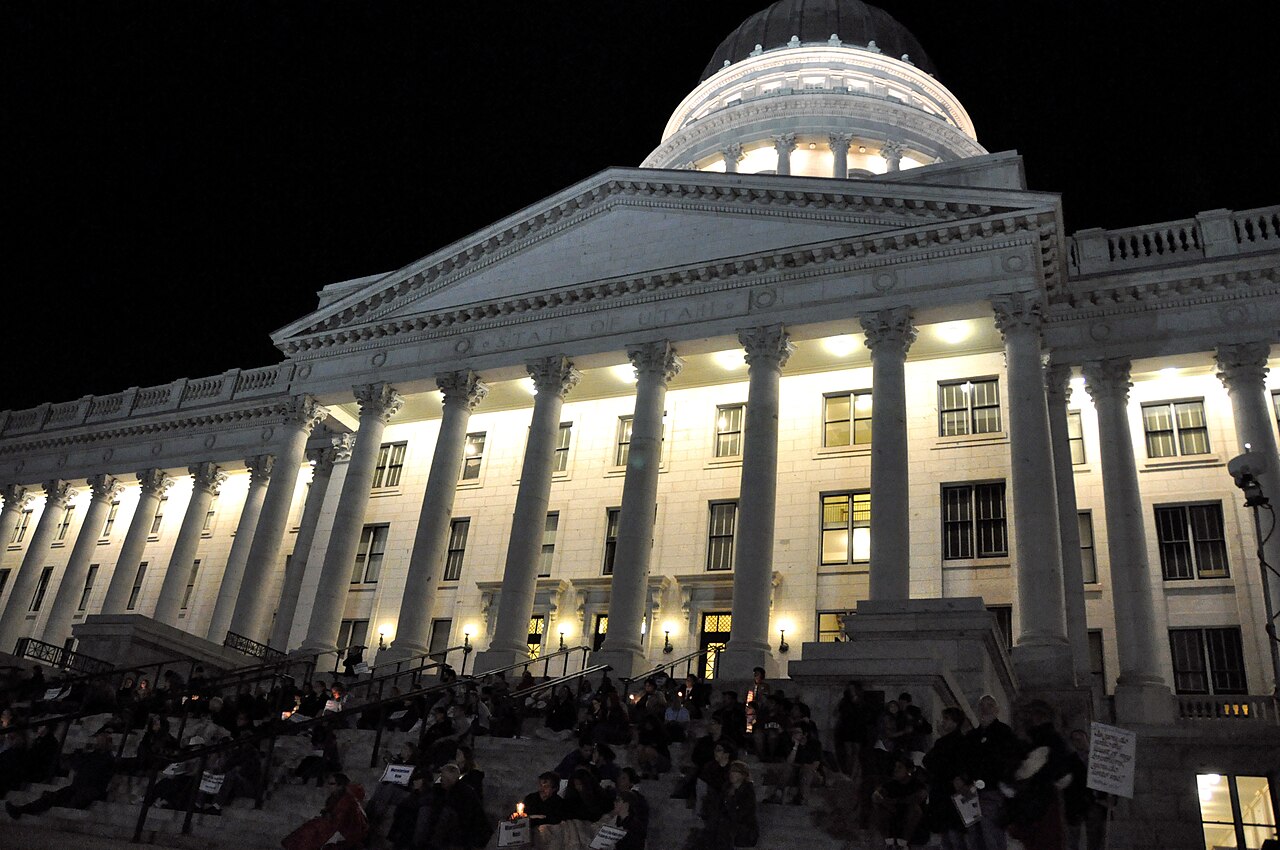
The Church of Jesus Christ of Latter-day Saints sought to distance itself from this narrative. Just days before the execution, the church issued an official statement clarifying that blood atonement was not a contemporary doctrine and that the sacrifice of Jesus Christ was sufficient for the forgiveness of all sins. Despite this, the media persisted in linking Gardner's choice to religious tradition. Proponents of the death penalty argued that Gardner's long history of violence justified the sentence, while opponents utilized the case to highlight the perceived barbarity of the firing squad. The debate was further complicated by the family of Michael Burdell, who, despite being his victim, advocated against Gardner's execution, stating that Burdell was a pacifist who would not have wanted another life taken in his name. Protests were held at the Utah State Capitol, with activists and some of Gardner's family members calling for an end to capital punishment in the state.
§ 08
THE JUNE 2010 EXECUTION
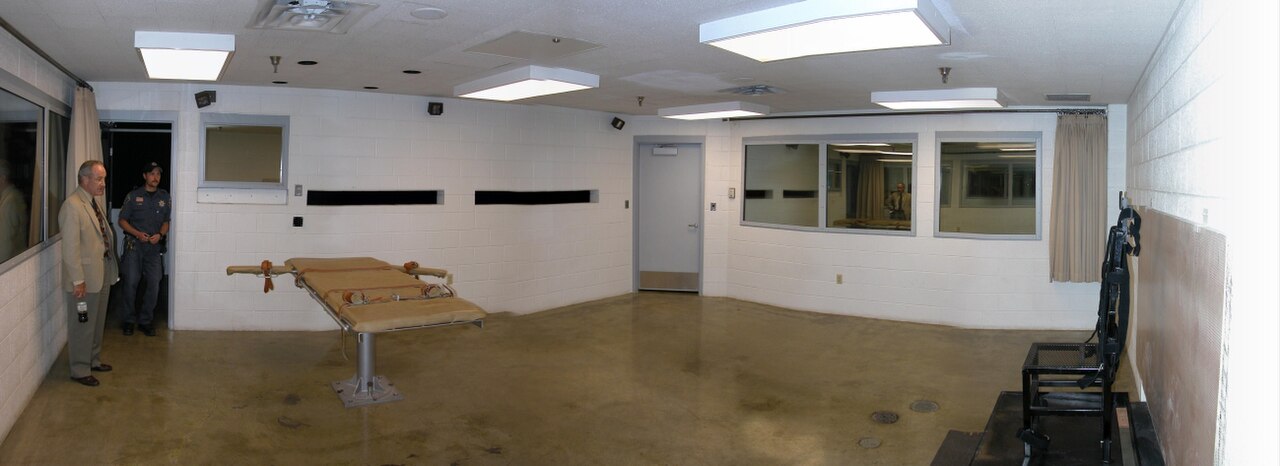
Ronnie Lee Gardner was executed at 12:15 a.m. on June 18, 2010, at the Utah State Prison in Draper. His final days were spent in a ritualized fast, which his lawyers described as being for 'spiritual reasons.' He consumed a final meal of steak, lobster, and apple pie 48 hours before his death and spent his remaining time reading and watching 'The Lord of the Rings' trilogy. On the night of the execution, he was led to a specialized chamber and secured to a black metal chair with multiple restraints. A black hood was placed over his head, and a small white target was pinned to his chest, directly over his heart. Sandbags were placed around the chair to manage any ricochets from the rifles.
The execution was carried out by a team of five anonymous police officers positioned 25 feet away behind a wall with small ports. Each officer was armed with a .30-caliber Winchester rifle. Following a tradition intended to diffuse individual responsibility, one of the rifles was loaded with a non-lethal wax bullet, while the others contained live ammunition. Upon the command to fire, four bullets struck Gardner simultaneously in the chest. He was pronounced dead two minutes later after a medical examiner verified his lack of pulse. Outside the prison, a vigil of family members and protesters gathered, playing music and holding candles in the dark. The event drew hundreds of journalists, as it was the first firing-squad execution in the United States in 14 years. In the aftermath, the state's handling of the execution, including the creation of a commemorative coin for participating staff, continued to fuel the national debate over the ethics and methods of capital punishment.
LAST WORDS
"I do not. No. — asked if he had any final statement."