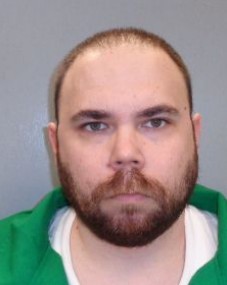
SUBJECT ON RECORD · EXECUTED BY RIFLE
Stephen Corey Bryant
South Carolina's third firing-squad execution — carried out during an eight-month stretch in which the state killed three men by rifle. Bryant chose the rifle in October 2025 and made no final statement.
- Born
- April 12, 1981
- Died
- November 14, 2025 · Broad River Correctional Institution, Columbia
- Age at death
- 44
- Convicted of
- Three counts of capital murder
- Method
- Firing squad
- Facility
- Broad River Correctional Institution — death chamber, Columbia
VICTIMS ON RECORD
- V·01Clifton Dale Gainey · 36 · shot in the head on a rural road · October 9, 2004
- V·02Willard Irving Tietjen Jr. · 62 · retired USAF sergeant, shot nine times in his own home · October 11, 2004
- V·03Christopher Earl Burgess · 35 · shot outside a convenience store · October 13, 2004
- V·04Clinton Brown · 56 · shot in the back while fishing · survived · October 8, 2004
§ 01
BIOGRAPHICAL OVERVIEW AND INITIAL OFFENSES
Stephen Corey Bryant was born on April 12, 1981, and spent much of his adult life in South Carolina. By the autumn of 2004, at the age of 23, he embarked on a violent and multi-day crime spree centered within Sumter County. The escalation of his criminal activity began on October 5, 2004, when he committed his first documented residential burglary. This initial break-in marked the start of a series of increasingly aggressive acts that would terrorize the local community over the following eight days. At the time, Bryant was employed and lived a seemingly normal life, which made the sudden transition to high-intensity criminal behavior particularly jarring for those in his immediate social and professional circles.
Three days after the first burglary, on October 8, Bryant targeted another residence in a similar manner. During this second intrusion, he successfully stole a .40 caliber Smith & Wesson semi-automatic handgun, a weapon that would quickly become the primary instrument in his subsequent acts of lethal violence. On that same day, Bryant utilized the stolen firearm for the first time in an unprovoked attack against a civilian. He encountered 56-year-old Clinton Brown, who was engaged in fishing along a local riverbank, and shot him in the back without warning or apparent provocation. Despite the severity of the wound and the shock of the assault, Brown managed to retain enough composure to drive himself to a nearby hospital, where he received life-saving treatment and eventually survived the encounter.
The transition from property crime to attempted homicide indicated a rapid and dangerous shift in Bryant's behavioral patterns. Investigators who later scrutinized this period sought to understand the psychological progression of his actions, noting that the acquisition of the stolen handgun provided him with the lethal means to escalate his criminal pursuits. The assault on Brown was characterized by its randomness and lack of a clear motive, establishing a forensic profile of a perpetrator acting with extreme impulsivity and an utter disregard for human life. As the spree continued into the following week, the forensic evidence gathered from these early scenes, including ballistic data from the .40 caliber weapon, would eventually play a crucial role in connecting Bryant to the string of violent crimes across Sumter County.
§ 02
THE HOMICIDE OF CLIFTON GAINEY
On October 9, 2004, the day after the shooting of Clinton Brown, Stephen Bryant murdered his long-time associate and coworker, 36-year-old Clifton Dale Gainey. The two men shared a history of personal and professional interaction, frequently engaging in recreational activities such as fishing trips and spending time with each other's families. On the day of the killing, the pair had gone out together under the pretense of purchasing beer, a mundane activity that masked Bryant's lethal intent. During this outing, Bryant used the stolen .40 caliber handgun to shoot Gainey in the head at close range. He then callously abandoned Gainey's body on a remote rural road, where it was later discovered by authorities and passing motorists.
Following the homicide, Bryant traveled directly to the mobile home that Gainey rented. He proceeded to burglarize the residence, removing several electronic devices and a large aquarium, demonstrating a level of detachment that allowed him to profit from the death of his friend. To conceal evidence of the theft and perhaps to further desecrate the victim's personal space, Bryant intentionally set the trailer on fire before fleeing the scene. The resulting blaze caused significant damage to the structure and its contents, requiring a full response from local fire departments. This act of arson, combined with the cold-blooded execution of a supposed friend, demonstrated a level of calculated cruelty that characterized much of Bryant's spree. Gainey, a father of two, was the first fatality in what was becoming an increasingly lethal series of events.
Forensic analysis of the scene and the victim's body provided investigators with critical data points that helped reconstruct the final moments of Gainey's life. The proximity of the shooter to the victim and the nature of the head wound suggested a deliberate, execution-style killing rather than a struggle or an accidental discharge. The subsequent arson at Gainey's home served as a secondary crime scene that allowed investigators to track Bryant's movements and establish a precise timeline of his activities throughout the day. The theft of specific items from the trailer, such as the aquarium, also provided unique physical evidence that would later be used to link Bryant directly to the crime. The betrayal of a personal acquaintance highlighted the unpredictable and dangerous nature of Bryant's psychological state during this eight-day period.
§ 03
THE ATTACK ON WILLARD TIETJEN
The most brutal incident of the spree occurred on October 11, 2004, when Stephen Bryant entered the home of Willard Irving Tietjen Jr. Tietjen, a 62-year-old retired United States Air Force sergeant, was inside his residence when Bryant initiated a violent home invasion. During the encounter, Bryant shot Tietjen nine times, ensuring the victim's death through an overwhelming application of force. The subsequent autopsy would later confirm the volume and trajectory of the shots, illustrating a methodical and excessive use of violence. After the shooting, Bryant engaged in further acts of sadism, using a lit cigarette to inflict painful burns on the deceased man's face and eyes. He also forcibly removed a ring from Tietjen's finger, treating the jewelry as a trophy or an item for later sale.
While Bryant was in the process of ransacking the Tietjen residence for valuables, including power tools and other household items, the victim's family attempted to contact him by phone. Bryant answered the telephone when Tietjen's wife and daughter called separately. In a chilling display of callousness, he informed both women that Willard Tietjen was dead, forcing them to learn of the tragedy from the killer himself. Before departing the scene, Bryant used the victim's blood to write a taunting message on a surface within the home. The message read, 'Victem 4 in 2 weeks. Catch me if u can.' This deliberate communication with law enforcement and the victim's family underscored the premeditated, narcissistic, and sadistic elements of Bryant's conduct.
The crime scene at the Tietjen home provided a wealth of forensic evidence for the investigating officers. The use of the victim's blood for the written message allowed for definitive DNA profiling, while the ballistics from the nine shell casings recovered at the scene matched the .40 caliber Smith & Wesson stolen earlier in the week. The physical evidence of the cigarette burns provided insight into the post-mortem treatment of the victim, which would later be used by prosecutors to argue for the death penalty based on the aggravating factor of extreme atrocity. The discovery of the body later that day prompted an immediate intensification of the manhunt, as authorities realized they were dealing with a serial offender who was actively challenging them to intervene.
§ 04
FINAL FATALITY AND APPREHENSION
The final lethal encounter of the spree took place on October 13, 2004. Christopher Earl Burgess, a 35-year-old man, encountered Stephen Bryant outside a local convenience store in Sumter County. For reasons never fully explained by the perpetrator, Bryant targeted Burgess after they left the establishment together. Bryant shot Burgess twice, with one bullet striking him in the head and the other in the chest, causing immediate death. Burgess's body was discovered less than two hours later by a hunter who came across the corpse on a rural road bed. This third murder in a five-day span prompted an urgent and coordinated response from local and state law enforcement agencies, who were now tracking a known spree killer.
Later that same day, investigative leads and surveillance of Bryant's known associates led authorities to a residence belonging to his girlfriend. It was there that Stephen Bryant was taken into custody without further incident. At the time of his arrest, Bryant had been at large for eight days since the start of his burglary spree. The swiftness of the apprehension following the murder of Burgess likely prevented further loss of life, as Bryant's own written message had suggested he intended to continue his violent rampage. Upon his arrest, Bryant was initially charged with three counts of murder, along with multiple counts of burglary, armed robbery, arson, and weapons possession. The evidence gathered from the various crime scenes was methodically processed to build a comprehensive case.
The arrest of Bryant brought a sense of relief to the residents of Sumter County, though the community remained deeply shaken by the randomness and brutality of the killings. People who knew Bryant, including his landlord and workplace supervisor, expressed profound shock at the allegations, describing him as having previously appeared to be a 'nice' and unremarkable individual. However, subsequent psychological evaluations conducted after his capture suggested a different reality. Experts noted that Bryant exhibited significant antisocial traits, high levels of impulsivity, and poor problem-solving capabilities. These behavioral markers, combined with a lack of empathy, provided a framework for understanding how a seemingly ordinary individual could commit such heinous acts over a short period.
§ 05
PRETRIAL BEHAVIOR AND JUDICIAL PROCEEDINGS
While awaiting trial in the Sumter-Lee Regional Detention Center, Stephen Bryant's conduct remained volatile and aggressive, presenting ongoing challenges for jail administrators. In October 2005, approximately one year after his arrest, he assaulted a correctional officer, an incident that led to additional criminal charges and his eventual transfer to a different facility for higher-level security. In a separate incident during the same month, Bryant was accused of throwing urine at a fellow inmate's cell door, an act of harassment that resulted in the liquid splashing onto the other prisoner's person. These incidents of misconduct within the jail system were meticulously documented by authorities and served to further illustrate Bryant's persistent disregard for rules and the safety of others.
In April 2007, Sumter County Prosecutor Kelly Jackson formally announced the state's intention to seek the death penalty for Bryant, citing the aggravated nature of the killings. The legal process reached a significant milestone on August 8, 2008, when Bryant entered a guilty plea to all three counts of murder and nine additional lesser charges. This plea was entered without any formal agreement or sentencing deal with the prosecution. Prosecutor Jackson clarified that the state would continue to pursue the death penalty, specifically focusing on the robbery-murder of Willard Tietjen as the primary basis for capital punishment under South Carolina law. The sentencing phase of the trial was scheduled for September 2008, where a judge would determine the finality of the sentence.
The sentencing hearing was presided over by Circuit Judge Thomas Russo and involved a detailed presentation of both aggravating and mitigating factors. During the proceedings, Bryant's defense team attempted to mitigate the severity of his sentence by presenting evidence of his troubled background. They argued that Bryant had been a victim of childhood sexual abuse and suffered from long-term drug addiction, which they claimed had resulted in significant brain damage. The defense contended that Bryant used narcotics as a means of self-medicating for his past traumas and that his judgment was impaired. However, the prosecution countered these arguments by highlighting the premeditated and exceptionally cruel nature of the murders. On September 11, 2008, Judge Russo sentenced Bryant to death for Tietjen's murder, while also imposing two life sentences for the killings of Gainey and Burgess.
§ 06
APPELLATE HISTORY AND MEDICAL CLAIMS
Following his transfer to death row at the Broad River Correctional Institution, Stephen Bryant began a protracted series of legal challenges to his conviction and sentence. The South Carolina Supreme Court reviewed his direct appeal and dismissed it on January 7, 2011, upholding the lower court's decision and the death sentence. Over the next decade, Bryant's legal team focused on his mental and developmental state as grounds for post-conviction relief. They argued that he suffered from intellectual disabilities and Fetal Alcohol Spectrum Disorder (FASD), a condition they attributed to his mother's heavy alcohol consumption during her pregnancy. These claims were central to his federal habeas corpus petitions as they moved through the appellate court system.
On January 28, 2025, after years of litigation, the 4th U.S. Circuit Court of Appeals issued a final ruling denying Bryant's appeal. The court rejected the arguments regarding his intellectual disability and FASD, finding that the evidence presented did not meet the rigorous legal threshold required to overturn a death sentence. This decision was a major setback for Bryant's efforts to avoid execution. His legal team made one final attempt to reach the highest court in the land, but on October 14, 2025, the United States Supreme Court declined to hear his case. This denial effectively exhausted Bryant's standard appellate options and paved the way for the South Carolina Attorney General to request an execution date.
During his seventeen years on death row, Bryant's behavior continued to be monitored by prison authorities. Records indicate he was disciplined twice for major infractions: once in 2009 for fighting with another inmate without a weapon and again in 2023 for being in possession of a contraband weapon. These incidents demonstrated that even in a maximum-security environment, Bryant remained a challenge for correctional staff and displayed a recurring pattern of non-compliance. Despite the ongoing legal battles and his developmental claims, the state remained firm in its pursuit of the death penalty, citing the gravity of his crimes and the finality of the judicial decisions rendered by multiple levels of the state and federal court systems.
§ 07
DEATH WARRANT AND METHOD SELECTION
On October 17, 2025, the South Carolina Supreme Court signed the death warrant for Stephen Bryant, setting his execution for November 14, 2025. Under the state's statutes, Bryant was required to select his preferred method of execution from three available options: lethal injection, the electric chair, or the firing squad. The law specifies that if an inmate fails to make a selection by a designated deadline, the default method is the electric chair. Bryant was given until October 31 to finalize his choice. This period was marked by last-minute legal maneuvering, as his attorneys attempted to delay the warrant by citing the impact of a federal government shutdown on their ability to represent him, though this request was ultimately denied by the court.
Bryant ultimately elected to be executed by a firing squad, a method he selected in writing. This decision made him the third person in South Carolina to choose this specific method since the state resumed executions in 2024. The reintroduction of the firing squad as an available option in South Carolina was part of a broader legislative effort to resolve ongoing issues related to the procurement of lethal injection drugs and to ensure the state could carry out death sentences. By choosing this method, Bryant joined a very small number of modern American inmates to face a firing squad, a practice that had otherwise been almost exclusively confined to the state of Utah. The choice of method added a significant layer of public and media attention to the final days of his life.
As the execution date approached, a final appeal was filed with the South Carolina Supreme Court on November 6, 2025. Bryant's lawyers once again raised the issue of his mother's substance abuse during pregnancy, arguing that the resulting brain damage rendered him incapable of adhering to the law. The prosecution vigorously opposed this stay, characterizing Bryant's actions as 'methodical' and 'cunning,' and asserting that he had taken pleasure in his lethal rampage. The South Carolina Supreme Court denied this final appeal on November 10, leaving only a petition for clemency to Governor Henry McMaster as a potential means of stopping the execution. Preparations at Broad River Correctional Institution proceeded according to protocol, with the state readying the specialized chamber.
§ 08
EXECUTION AND FINAL DISPOSITION
On the afternoon of November 14, 2025, Stephen Bryant was granted his requested final meal, which was served several hours before the execution. The elaborate menu included a spicy seafood stir-fry with various mixed ingredients, fried fish served over rice, egg rolls, and stuffed shrimp. For dessert, he consumed two candy bars and a large slice of German chocolate cake. This ritual, common to the execution process, was one of the final administrative steps before the sentence was carried out. Meanwhile, Governor Henry McMaster reviewed Bryant's petition for clemency, which sought to commute the death sentence to life imprisonment without the possibility of parole. In keeping with longstanding South Carolina executive practice, the governor denied the request just minutes before the scheduled start.
The execution process commenced at 6:02 p.m. inside the specialized chamber at the Broad River Correctional Institution. Bryant was secured for the firing squad procedure, and the designated marksmen carried out the sentence as prescribed by law. At 6:05 p.m., a physician officially pronounced Stephen Bryant dead. He elected not to provide a final statement before the procedure began, maintaining silence in his final moments. The execution was conducted in accordance with strict state protocols and was witnessed by various officials, media representatives, and family members of the victims. Bryant became the 50th person executed by the state of South Carolina since the reinstatement of the death penalty in 1977, and the third to die by firing squad during that same period.
The conclusion of Bryant's life marked the end of a legal saga that spanned over two decades, beginning with the October 2004 crime spree in Sumter County. The finality of the execution brought a close to the state's case, though the impact of his crimes remained a permanent part of the local history. The use of the firing squad continued to be a subject of significant legal and ethical debate across the country, but for the families of Gainey, Tietjen, and Burgess, the day represented the culmination of a long and difficult process of seeking justice through the legal system. Bryant's remains were handled according to his final wishes and state regulations, ending the record of one of South Carolina's most notorious spree killers.
LAST MEAL
Spicy mixed-seafood stir-fry, fried fish over rice, egg rolls, stuffed shrimp, two candy bars, and German chocolate cake.