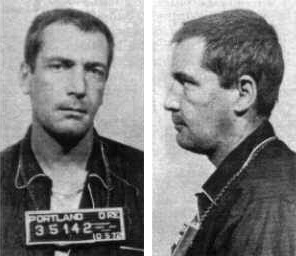
SUBJECT ON RECORD · EXECUTED BY RIFLE
Gary Mark Gilmore
The first person executed in the United States after the Supreme Court reinstated the death penalty in 1976. Waived every appeal, demanded the state carry out his sentence, and became a national obsession in the process.
- Born
- December 4, 1940 · McCamey, Texas
- Died
- January 17, 1977 · Utah State Prison, Draper
- Age at death
- 36
- Convicted of
- First-degree murder (Bushnell)
- Method
- Firing squad
- Facility
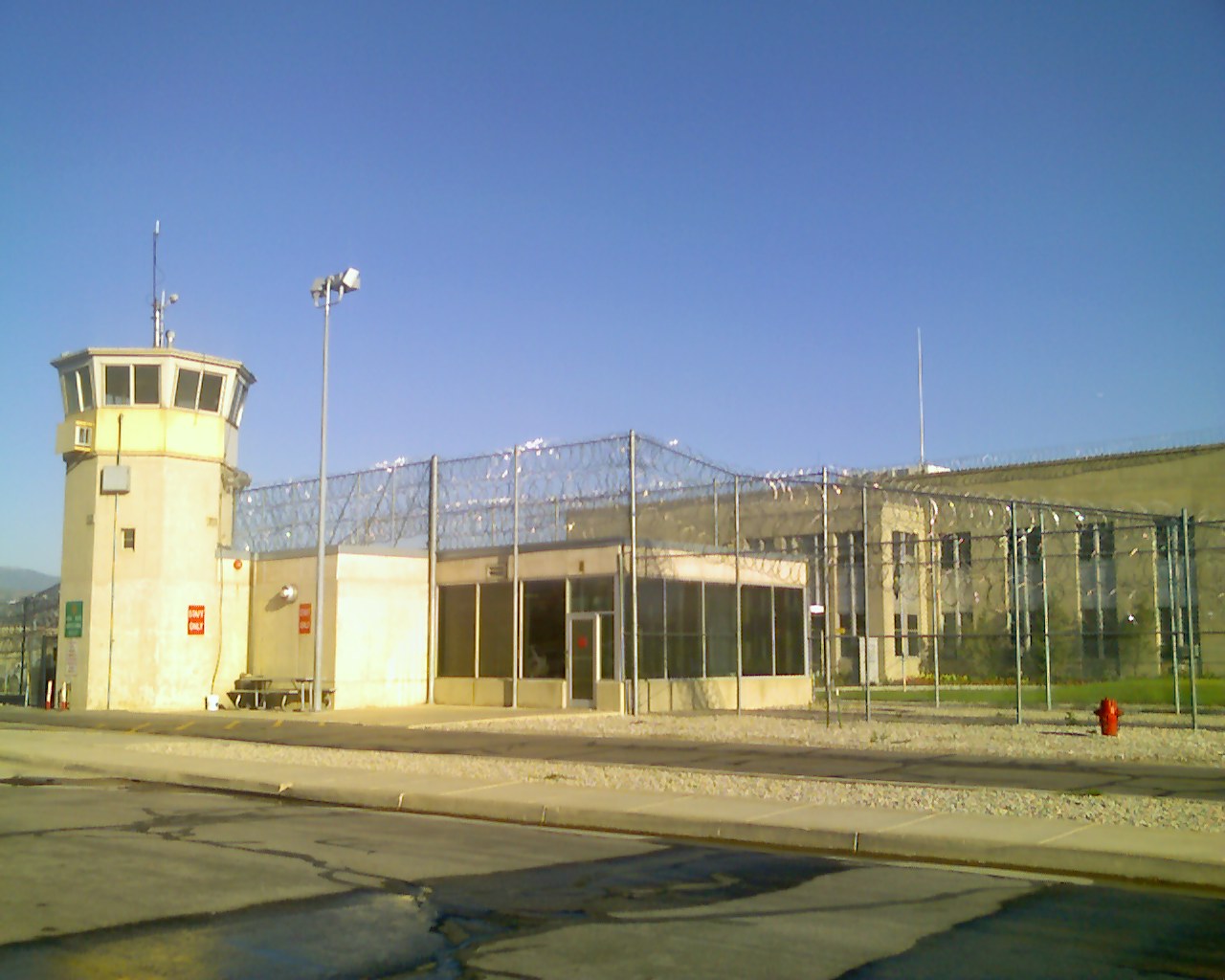
- Utah State Prison — abandoned cannery behind the prison
VICTIMS ON RECORD
- V·01Max Jensen · 25 · gas-station attendant · Orem · July 19, 1976
- V·02Bennie Bushnell · 26 · motel manager · Provo · July 20, 1976
§ 01
EARLY LIFE AND GENEALOGY
Gary Mark Gilmore was born in the small town of McCamey, Texas, on December 4, 1940. At his birth, he was given the name Faye Robert Coffman, a pseudonym adopted by his parents, Frank and Bessie Gilmore, to evade law enforcement authorities who were pursuing Frank for his various fraudulent activities. Frank Gilmore Sr. was a professional con man and a severe alcoholic who moved his family constantly across the Western United States to stay ahead of the law. Gary was the second of four sons in a household defined by instability and fear. His youngest brother, Mikal Gilmore, would eventually document the family's harrowing history as a prominent music journalist and author. The domestic environment was characterized by extreme volatility; Frank Sr. was a rigid and violent disciplinarian who frequently whipped his sons with leather straps and belts for minor perceived infractions.
The family was also haunted by a pervasive sense of illegitimacy and myth-making. Gary’s mother, Bessie, was an outcast from a Mormon community in Utah who believed her husband was the illegitimate son of the world-famous magician Harry Houdini. While this claim was factually unsupported, it permeated the family's identity. Gary himself was deeply traumatized when he discovered his original birth certificate under the name Faye Coffman, leading him to believe he might be illegitimate or the son of another man. This discovery fueled a lifelong resentment and a feeling of being an outsider within his own family. By 1952, the Gilmores settled in Portland, Oregon. Despite showing signs of intellectual brilliance—testing with an IQ of 133 and exhibiting a natural talent for art—Gary’s teenage years were consumed by rebellion. He dropped out of high school in the ninth grade and began a cycle of petty crime, establishing a pattern of incarceration that would occupy most of his adult life.
§ 02
CRIMINAL HISTORY IN OREGON
Gilmore’s formal introduction to the criminal justice system occurred at the age of 14 when he was arrested for orchestrating a car theft ring with his peers. This led to his first stint at the MacLaren Reform School for Boys in Woodburn, Oregon. His adolescence and early adulthood became a repetitive cycle of arrests and short-lived releases. By 1960, he was sentenced to the Oregon State Correctional Institution for another vehicle theft. The death of his father from terminal lung cancer in 1962 served as a psychological breaking point for Gary. At the time, he was being held in Portland’s Rocky Butte Jail on traffic charges. Upon hearing the news of his father’s passing from a jail guard, Gary attempted suicide by slitting his wrists, a gesture that signaled the beginning of a downward spiral into more serious and violent offenses.
Throughout the mid-1960s, Gilmore’s behavior grew increasingly erratic and dangerous, fueled by chronic alcoholism. In 1964, he was sentenced to fifteen years as a habitual offender and transferred to the Oregon State Penitentiary in Salem. During this incarceration, prison psychiatrists diagnosed him with antisocial personality disorder, noting episodes of psychotic decompensation. Despite this diagnosis, he was granted a conditional release in 1972 to participate in a work-study program at a community college in Eugene. However, Gilmore failed to comply with any of the program's requirements and was soon arrested for armed robbery. His reputation for extreme violence and his inability to adjust to the prison's social structure eventually necessitated his transfer to the federal maximum-security facility in Marion, Illinois, in 1975. This transfer highlighted the failure of the state penal system to rehabilitate or even contain his volatile temperament.
§ 03
1976 PAROLE AND RELATIONSHIP WITH NICOLE BAKER
In April 1976, Gary Gilmore was granted conditional parole and relocated to Provo, Utah, to live with his cousin, Brenda Nicol. Nicol acted as a primary support system, helping him secure employment at a shoe repair shop owned by his uncle and later at an insulation company. However, the transition from decades of institutionalization to the freedoms of civilian life proved impossible for Gilmore. Within weeks, he returned to his established patterns of heavy drinking, theft, and physical altercations. During this period, the 35-year-old Gilmore began a relationship with 19-year-old Nicole Baker, a twice-divorced mother of two young children. The relationship was immediate and intense, fueled by a mutual sense of marginalization, but it was also deeply dysfunctional and characterized by Gilmore’s possessive and aggressive behavior.
The romance with Baker was a source of significant tension both within the relationship and with the surrounding community. Baker’s family, recognizing Gilmore’s history and his volatile nature, made concerted efforts to keep the two apart. Gilmore’s inability to maintain a stable job or sobriety placed immense pressure on the young woman. His frequent outbursts of temper and his reliance on criminal activity to fund his lifestyle made the relationship increasingly dangerous. By July 1976, the relationship had begun to collapse as Baker sought to distance herself from Gilmore’s erratic demands. This period of personal instability and romantic rejection is often viewed by biographers as the immediate precursor to the violent acts he would soon commit. Gilmore’s inability to cope with the prospect of losing Baker appeared to strip away whatever remained of his social and moral restraints.
§ 04
MURDER OF MAX JENSEN
On the night of July 19, 1976, Gary Gilmore initiated a sequence of horrific violence in Orem, Utah. His target was a Sinclair gas station where 25-year-old Max Jensen was working the evening shift. Jensen was a student at Brigham Young University, a husband, and the father of a young child. When Gilmore arrived at the station and demanded money, Jensen complied fully, offering no resistance. Despite this total cooperation, Gilmore forced Jensen into the station’s office and ordered him to lie face down on the floor. In a cold and calculated act of unnecessary brutality, Gilmore placed a .22-caliber pistol to the back of Jensen’s head and fired a single shot, killing him instantly. The robbery yielded a meager amount of cash, but the cost in human life was absolute.
The murder of Max Jensen was a senseless act that shocked the local community due to its sheer lack of provocation. Investigators later noted that Jensen had done everything possible to survive the encounter, yet Gilmore chose to execute him regardless. The forensic evidence at the scene was minimal, and without eyewitnesses, the case initially lacked the direct evidence needed for a swift prosecution. Gilmore fled the scene, seemingly unfazed by the life he had just extinguished. This crime served as the opening act of a two-night spree that would eventually bring the eyes of the nation to Utah. The Jensen family was left to grapple with a loss that had no rational explanation, as Gilmore prepared to commit a nearly identical crime the very next evening.
§ 05
MURDER OF BENNIE BUSHNELL
Less than twenty-four hours after the Jensen homicide, Gilmore targeted the City Center Motel in Provo on the evening of July 20, 1976. The manager on duty was 26-year-old Bennie Bushnell, another Brigham Young University student who, like Jensen, was a married father with a young infant. Gilmore entered the motel and demanded the cash from the register. Bushnell obeyed the instructions and handed over the money. Mirroring the events of the previous night, Gilmore ordered Bushnell to lie down on the floor. Despite the victim’s compliance, Gilmore shot him in the head at point-blank range. This time, however, the act was witnessed by Peter Arroyo, a guest at the motel who had seen Gilmore in the registration office shortly before the shooting occurred.
Gilmore’s attempt to escape the scene of the Bushnell murder was hampered by his own incompetence. As he fled the motel and attempted to discard the murder weapon, he accidentally discharged the pistol into his own right hand. The injury was significant, leaving a trail of blood that led away from the motel toward a nearby service station where Gilmore had left his truck for repairs. Michael Simpson, a mechanic at the garage, watched as Gilmore hid the firearm in a nearby bush and noticed the crudely bandaged, bleeding hand. After hearing a report of the shooting on a police scanner, Simpson noted Gilmore’s license plate number and immediately contacted the police. The combination of an eyewitness to the crime and a civilian who tracked Gilmore’s movements provided the authorities with the definitive evidence they needed to end his violent rampage.
§ 06
ARREST AND LEGAL PROCEEDINGS
Following the murder of Bennie Bushnell, Gary Gilmore’s flight was brief. His cousin, Brenda Nicol, alerted the police after Gilmore contacted her asking for painkillers and bandages for his self-inflicted gunshot wound. Utah State Police intercepted Gilmore as he attempted to drive out of Provo, and he surrendered to officers without resistance. The trial for the Bushnell murder began on October 5, 1976, in a Provo courtroom. The prosecution presented a powerful case, featuring the testimony of Peter Arroyo and Michael Simpson. Ballistics experts from the FBI confirmed that the shell casings from the motel and the bullet that killed Bushnell matched the .22-caliber pistol Simpson had seen Gilmore hide in the bushes. A patrolman also detailed the blood trail that linked the defendant directly to the weapon.
Gilmore’s defense was notably passive. His attorneys, Michael Esplin and Craig Snyder, did not cross-examine the majority of the prosecution’s witnesses and chose not to call any witnesses of their own. Although Gilmore briefly considered testifying in his own defense to argue that his actions were the result of a dissociative state, psychiatric evaluations by four different experts concluded that he was legally sane and understood the nature of his crimes. He subsequently withdrew his request to testify. During the trial's closing arguments, his defense team suggested the shooting might have been accidental, but the jury was unconvinced. After just a few hours of deliberation on October 7, the jury returned a guilty verdict for first-degree murder. That same afternoon, they unanimously recommended the death penalty, citing the cold-blooded nature of the killing as a special circumstance.
§ 07
APPEALS WAIVER AND SUICIDE ATTEMPTS
In the aftermath of his death sentence, Gary Gilmore took the unprecedented step of waiving all his rights to appeal, stating that he was ready to accept the court’s judgment. This decision placed him at the center of a national firestorm regarding the morality and legality of capital punishment. Civil rights organizations, most notably the American Civil Liberties Union (ACLU) and the National Association for the Advancement of Colored People (NAACP), worked vigorously to block the execution, arguing that the state should not be allowed to carry out a death sentence even if the prisoner consented. Gilmore was vocally hostile toward these interventions, frequently telling these groups to stay out of his business and asserting that he had a right to die with dignity.
The legal battle resulted in several stays of execution, which Gilmore found intolerable. The uncertainty of his fate led to two suicide attempts while he was on death row at the Utah State Prison. The first attempt occurred in November 1976, immediately following a stay that postponed his original execution date. The second attempt took place a month later in December. In both instances, he ingested an overdose of drugs that had been smuggled into the prison. These acts were widely interpreted as Gilmore’s attempt to maintain control over his own life and death in a system he felt was unfairly prolonging his existence. Under Utah’s statutes, he was permitted to choose the method of his execution. He rejected hanging, fearing it might be botched, and instead opted for the firing squad, a choice that underscored the violent nature of his life and his end.
§ 08
EXECUTION BY FIRING SQUAD
On the morning of January 17, 1977, Gary Gilmore became the first person executed in the United States in nearly a decade. The execution was carried out at the Utah State Prison in Draper, within the confines of an abandoned cannery that had been repurposed for the occasion. Gilmore was transported to the site and strapped into a wooden chair against a backdrop of sandbags designed to absorb the incoming rounds. Five volunteer law enforcement officers from the county where he was convicted were chosen as the marksmen. They stood concealed behind a curtain with small apertures for their rifles. The protocol involved four shooters with live ammunition and one with a blank round to provide the executioners with the psychological comfort of not knowing who fired the fatal shot.
Just before the execution, the prison physician placed a black hood over Gilmore’s head and pinned a small white target over his heart. When asked if he had any final words, Gilmore simply said, "Let's do it." A Catholic chaplain, Reverend Thomas Meersman, administered the last rites, and Gilmore’s final communication was a brief Latin exchange with the priest. At 8:07 a.m., the command was given, and the firing squad discharged their .30-30-caliber rifles from a distance of twenty feet. Gilmore was struck by multiple rounds and was pronounced dead within moments. The execution was witnessed by a small group of officials and his brother, Mikal, who later noted that there appeared to be five holes in Gilmore’s shirt, suggesting the state may not have used a blank round at all.
§ 09
POST-MORTEM AND CULTURAL IMPACT
Immediately following his death, Gilmore’s remains were treated according to his prior requests. His corneas were harvested and successfully transplanted into two waiting recipients, a final act that stood in stark contrast to the violence of his life. After a formal autopsy, his body was cremated, and his ashes were scattered from an airplane over the town of Spanish Fork, Utah. The execution resonated throughout American culture, marking the end of the moratorium on the death penalty that had followed the 1972 Furman v. Georgia ruling. The intense media coverage of the case helped transform Gilmore into a dark folk hero for some and a symbol of judicial cruelty for others.
The most significant cultural legacy of the case was Norman Mailer’s 1979 masterpiece, "The Executioner's Song." The non-fiction novel provided a massive, detailed account of Gilmore's life, his crimes, and the legal circus that surrounded his execution. The book was a critical and commercial triumph, winning the Pulitzer Prize and sparking renewed national debate over capital punishment. Additionally, Gilmore’s final words, "Let's do it," found an unexpected afterlife in the world of marketing. Dan Wieden, the co-founder of the Wieden+Kennedy advertising agency, later admitted that he adapted the phrase into Nike’s famous "Just Do It" slogan. This strange connection between a double murderer’s last words and a global brand remains one of the most curious footnotes in the history of American advertising.
§ 10
LITERARY AND ARTISTIC LEGACY
The legacy of Gary Gilmore continued to evolve through the personal reflections of his family and the wider artistic community. His youngest brother, Mikal Gilmore, published a haunting memoir in 1994 titled "Shot in the Heart," which explored the deep-seated trauma and violence that had plagued the Gilmore family for generations. The book provided a psychological context for Gary’s crimes, tracing the roots of his behavior back to their father’s abusive nature and the family’s fractured history. "Shot in the Heart" was widely acclaimed for its honesty and depth, winning the National Book Critics Circle Award and the Los Angeles Times Book Prize, and it was later adapted into a television film for HBO.
Gary Gilmore’s story has also served as a touchstone for numerous other artists and writers. The punk rock band The Adverts released the single "Gary Gilmore's Eyes" in 1977, a song written from the perspective of a transplant recipient who begins to see the world through the eyes of a killer. In the realm of contemporary art, Matthew Barney featured Gilmore as a central figure in his film "Cremaster 2," exploring themes of genealogy and fate. The Gilmore case remains a foundational case study in legal ethics classes, particularly regarding the intersection of mental health and the right to refuse legal appeals. His life and death continue to be analyzed as a uniquely American tragedy, representing the complex interplay between individual pathology, familial trauma, and the finality of the state’s power.
LAST WORDS
"Let's do it."